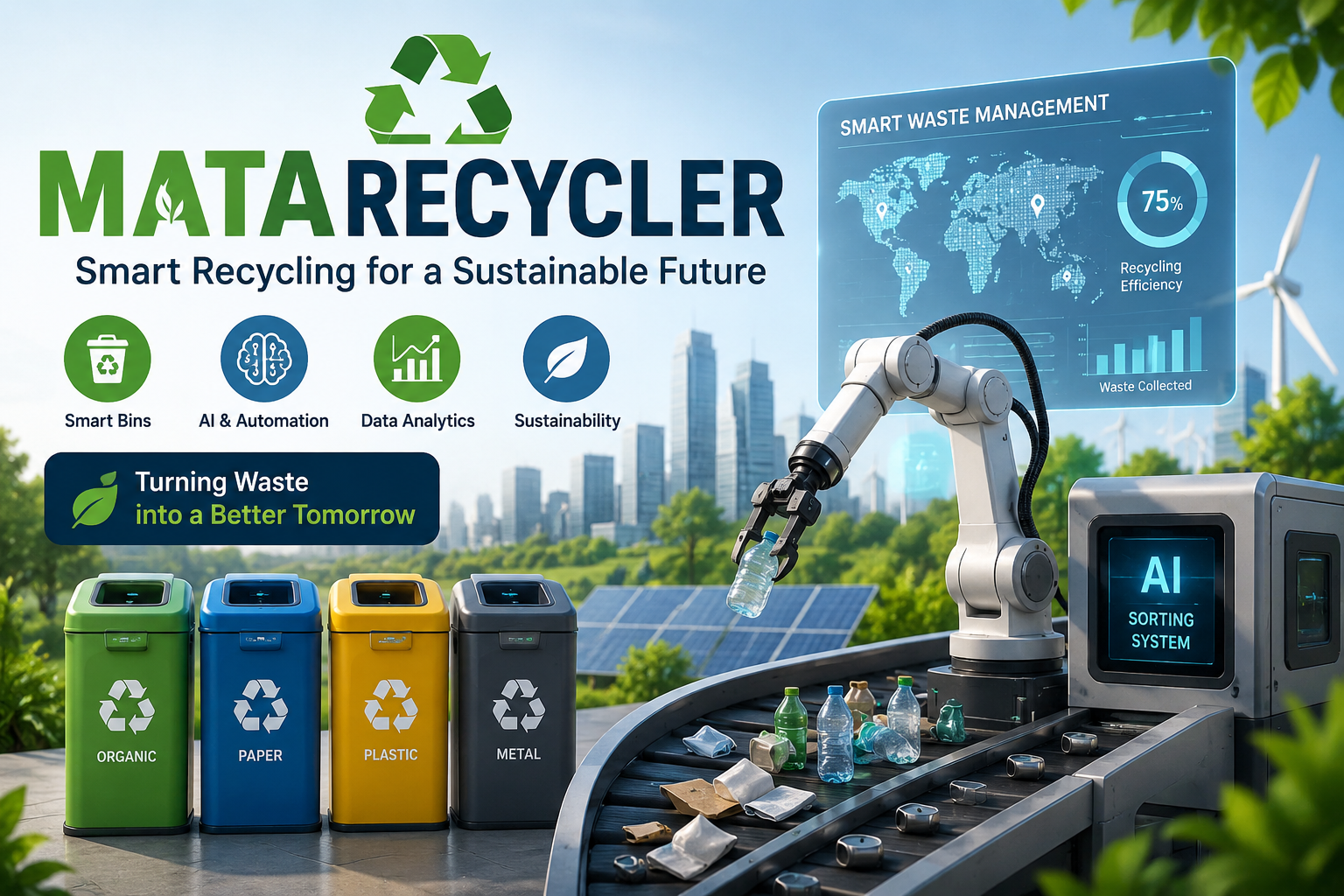
MataRecycler: Smart Recycling and Sustainable Waste Management
MataRecycler is gaining attention as a modern approach to smart recycling and sustainable waste management. As global waste continues to increase, governments, businesses, and communities are exploring innovative ways to improve recycling efficiency while reducing environmental impact. Commonly associated with technology-driven recycling, MataRecycler emphasizes smarter resource recovery, automation, and sustainable practices that help keep valuable materials in use instead of sending them to landfills.
What Is MataRecycler?
MataRecycler is commonly described as a smart recycling and waste management concept designed to improve the collection, sorting, processing, and reuse of recyclable materials. While publicly available information varies, the overall idea centers on making recycling more efficient through technology-driven solutions.
Unlike conventional recycling systems that often depend on manual sorting and fixed collection schedules, MataRecycler emphasizes intelligent resource recovery, automation, and data-driven decision-making. Its goal is to maximize recycling efficiency while reducing landfill waste and conserving valuable natural resources.
Rather than focusing solely on waste disposal, MataRecycler promotes a broader vision of sustainability by encouraging materials to remain part of the production cycle instead of becoming environmental pollutants.
Why Has MataRecycler Gained Attention?
Several global trends have contributed to growing interest in MataRecycler:
- Increasing environmental awareness
- Rising waste generation worldwide
- Growing investment in smart city technologies
- Advances in artificial intelligence and automation
- Greater focus on sustainable development and circular economy initiatives
As industries continue seeking innovative ways to reduce waste and improve operational efficiency, concepts like MataRecycler have become increasingly relevant.
Why Traditional Recycling Needs Improvement
Traditional recycling has played an important role in reducing waste, but it also faces several limitations that affect its overall effectiveness.
Common Challenges of Conventional Recycling
Many recycling facilities still rely heavily on manual sorting, which can be time-consuming and prone to errors. Contaminated recyclable materials often end up in landfills because they cannot be processed efficiently.
Other common challenges include:
- Overflowing waste collection bins
- High transportation costs
- Limited recycling infrastructure
- Low public participation
- Inefficient resource recovery
These issues reduce recycling efficiency and increase the environmental impact of waste management.
How Smart Recycling Offers a Better Approach
Modern recycling concepts, such as MataRecycler, aim to overcome these limitations by introducing intelligent technologies that improve every stage of the recycling process.
Benefits of smart recycling include:
- More accurate material identification
- Reduced contamination
- Automated waste sorting
- Better collection planning
- Improved recycling rates
- Data-driven waste management
These improvements help organizations recover more valuable materials while lowering operational costs and environmental impact.
How MataRecycler Works
Although different implementations may vary, MataRecycler generally follows a structured recycling process designed to maximize resource recovery.
Waste Collection
The process begins with collecting recyclable materials from households, businesses, schools, industries, and public collection points.
Proper waste separation at the source improves the quality of recyclable materials and reduces contamination before processing begins.
Intelligent Material Sorting
After collection, recyclable materials are sorted according to their type.
Modern recycling technologies can identify materials such as:
- Plastic
- Paper
- Glass
- Aluminum
- Steel
- Electronic waste
Advanced sorting systems reduce human error while improving processing efficiency.
Material Processing
Once materials have been separated, they are cleaned and processed using techniques such as:
- Washing
- Shredding
- Crushing
- Melting
- Refining
These processes prepare recycled materials for reuse in manufacturing.
Resource Recovery and Reuse
The final stage involves converting processed materials into raw materials that manufacturers can use to produce new products.
This continuous reuse of resources supports long-term environmental sustainability while reducing dependence on newly extracted materials.
Technologies Behind MataRecycler
Technology plays a central role in modern recycling systems. MataRecycler is often associated with several innovations that improve recycling efficiency and resource management.
Artificial Intelligence (AI)
Artificial intelligence can analyze waste materials and identify recyclable items with remarkable accuracy.
Potential applications include:
- Material recognition
- Automated decision-making
- Contamination detection
- Continuous learning for improved sorting
Internet of Things (IoT)
IoT technology connects recycling equipment through sensors that provide real-time information.
Smart sensors can monitor:
- Bin fill levels
- Collection schedules
- Equipment performance
- Waste generation trends
This allows waste collection services to operate more efficiently.
Computer Vision
Computer vision systems analyze images of waste materials to distinguish between different recyclable items.
Combined with AI, these systems improve sorting accuracy while reducing contamination.
Robotics and Automation
Automated sorting equipment can process large volumes of recyclable materials much faster than manual systems.
Benefits include:
- Higher productivity
- Reduced labor requirements
- Greater consistency
- Improved recycling quality
Cloud Computing and Data Analytics
Cloud platforms collect and analyze recycling data from connected systems.
Organizations can use this information to:
- Track recycling performance
- Identify waste trends
- Improve operational planning
- Support sustainability reporting
Key Benefits of MataRecycler
Environmental Benefits
One of MataRecycler’s primary objectives is reducing environmental impact.
Potential environmental benefits include:
- Lower landfill waste
- Reduced pollution
- Lower greenhouse gas emissions
- Conservation of natural resources
- Improved ecosystem protection
Economic Benefits
Smarter recycling can also create financial advantages.
Organizations may benefit from:
- Lower waste management costs
- Better operational efficiency
- Improved resource recovery
- Reduced raw material expenses
Social Benefits
Communities benefit from cleaner public spaces and greater awareness of responsible recycling practices.
Educational initiatives can encourage people to adopt environmentally responsible habits that support long-term sustainability.
Business Advantages
Businesses implementing smarter recycling practices may improve:
- ESG performance
- Regulatory compliance
- Corporate sustainability goals
- Brand reputation
- Resource efficiency
Practical Applications of MataRecycler
The principles associated with MataRecycler can be applied across many sectors.
Residential Communities
Households can improve recycling through better waste separation and participation in local recycling programs.
Commercial Buildings
Businesses can reduce waste disposal costs while improving recycling performance through smarter waste management systems.
Manufacturing Facilities
Manufacturers can recover production waste, reduce raw material consumption, and improve sustainability throughout the production process.
Educational Institutions
Schools and universities can combine recycling initiatives with environmental education to encourage sustainable behavior among students.
Municipal Waste Management
Local governments can integrate intelligent waste collection into broader smart city initiatives to improve public services.
Smart Cities
Connected waste management systems can optimize collection routes, monitor recycling performance, and improve environmental planning for growing urban areas.
MataRecycler and the Circular Economy
Understanding the Circular Economy
Traditional economic systems typically follow a “take, make, and dispose” approach.
A circular economy seeks to eliminate waste by keeping materials in continuous use through recycling, repairing, refurbishing, and remanufacturing.
How MataRecycler Supports Circular Resource Management
MataRecycler aligns with circular economy principles by encouraging:
- Material recovery
- Product reuse
- Waste reduction
- Resource conservation
- Sustainable manufacturing
This approach helps extend the lifespan of valuable materials while reducing environmental pressure.
MataRecycler vs Traditional Recycling
Traditional recycling often depends on manual labor, scheduled collections, and limited performance monitoring. Although effective in many situations, these systems frequently struggle with contamination and inefficient resource recovery.
MataRecycler represents a more intelligent approach by incorporating automation, AI-assisted sorting, smart monitoring, and data analytics. These technologies improve recycling accuracy, optimize waste collection, and support better decision-making.
While advanced systems require greater investment, they have the potential to deliver higher recycling rates and improved long-term sustainability.
Challenges and Limitations
Despite its advantages, MataRecycler also faces several practical challenges.
High Initial Investment
Implementing advanced recycling technologies often requires significant financial investment in equipment, infrastructure, and software.
Infrastructure Requirements
Some regions lack the facilities needed to support modern recycling technologies effectively.
Public Participation
Successful recycling still depends on individuals separating waste correctly before collection.
Technology Adoption
Organizations may require employee training and ongoing maintenance to operate advanced recycling systems successfully.
Data Management
Connected recycling systems generate large amounts of operational data that must be managed securely and efficiently.
The Future of MataRecycler
The future of smart recycling is expected to become increasingly technology-driven.
Smarter Artificial Intelligence
AI systems will likely become even better at identifying recyclable materials while reducing contamination.
Greater Automation
Advanced robotics may improve processing speed and reduce operational costs.
Expansion of Smart Cities
More municipalities are expected to integrate intelligent waste management into their digital infrastructure.
Stronger Sustainability Goals
Governments and businesses continue investing in recycling initiatives that support environmental regulations and corporate sustainability objectives.
Digital Waste Management
Real-time monitoring and predictive analytics are expected to improve recycling efficiency while supporting long-term planning.
Final Thoughts
As environmental challenges continue to grow, smarter approaches to waste management have become increasingly important. MataRecycler represents a forward-looking concept that combines recycling, sustainability, and modern technology to improve resource recovery and reduce environmental impact.
Although descriptions of MataRecycler vary, its core principles remain consistent: making recycling more efficient, minimizing waste, and supporting a circular economy through innovation. By integrating technologies such as artificial intelligence, automation, IoT, and data analytics, the concept reflects the direction in which modern waste management is evolving.
Creating a more sustainable future will require collaboration between governments, businesses, and individuals. By embracing smarter recycling practices and viewing waste as a valuable resource rather than a disposable problem, communities can reduce pollution, conserve natural resources, and contribute to a cleaner, healthier planet for future generations.